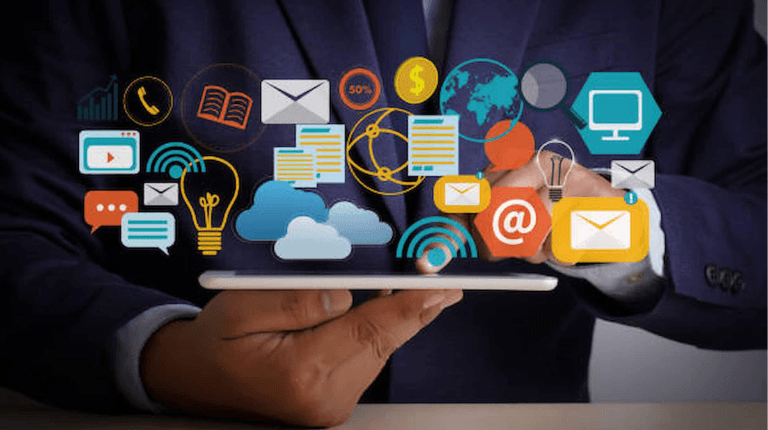
With the popularity and accessibility of internet services, there are so many people online every day. The number keeps going up daily as more and more people are becoming tech-savvy.
It is a fact that the continuous internet usage has also increased by 7 per cent among adults, within the past three years based on the Pew research reports. Consumers’ behavior has changed rapidly which means that a lot of offline marketing activities are no more effective than they have been in the past.

The general idea of marketing is connecting with the right audience and pitching your business at the appropriate time. Presently, marketing means getting to know why your target audience is how much time they spend on the internet and how best to reach out to them.
Digital marketing in its simple terms means marketing online to the general audience. Here at Raven and Macaw, we believe that inbound marketing is an effective way to engage online users and market your product and services to the users. It is also a way to delight the customers of your business in cyberspace. With that being said, a lot of people have questions about the details surrounding digital marketing and what it entails. In this piece, we have decided to answer all questions relating to digital marketing and how it’s being carried out in the present age.
What is Digital Marketing?
Digital marketing is the process of designing, executing, and measuring marketing campaigns that use digital technologies to reach and engage consumers. It has become an essential part of the marketing mix for businesses of all sizes, as it enables them to connect with their customers where they are spending the majority of their time: online. Digital marketing encompasses a variety of channels, including email, social media, search engines, and websites.
Digital marketing encompasses a variety of activities, including search engine optimization (SEO), social media marketing, email marketing, paid advertising, and more. The goal of digital marketing is to create an interactive relationship with customers and prospects through electronic channels.
How Does a Business Define Digital Marketing?
At this point, it is crucial for every business to build their brand awareness on the internet. Every brand has invested in building a website that shows what its activities as a business are.
There are many different ways to execute a digital marketing strategy. Some businesses focus on website optimization, others on email marketing, and still others on social media campaigns. The most important thing is to identify which channels your customers are using and to tailor your marketing efforts to those channels.
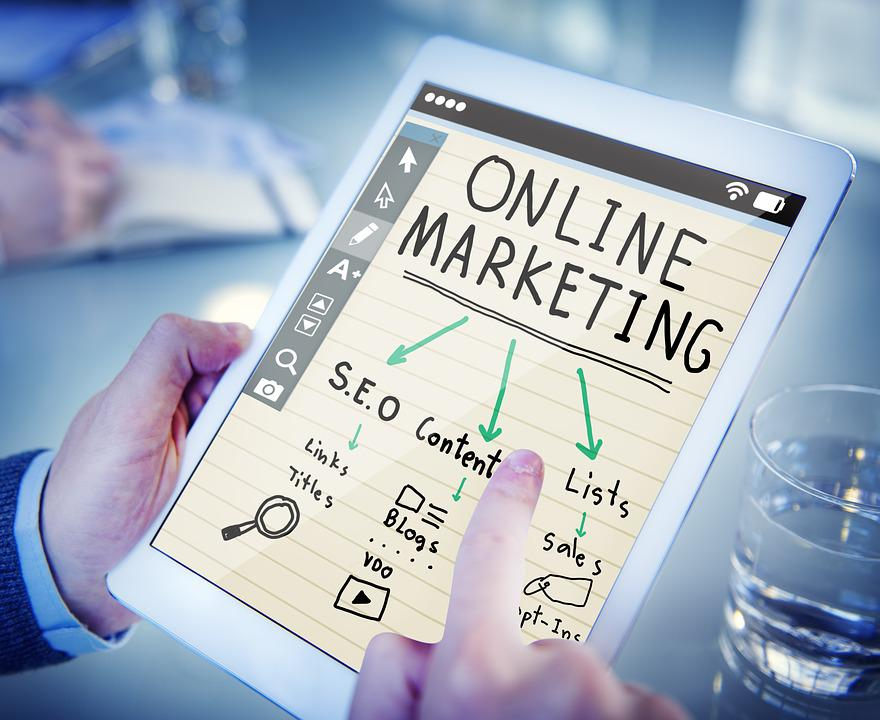
Digital content and marketing is an essential way for engaging consumers. Customers now expect and rely on your website and digital marketing efforts to learn about brands. Since digital marketing has so many options and strategies associated with it, you can get creative and experiment with a variety of marketing tactics on a budget.
Why is Digital Marketing Important?
Digital marketing is important because it allows businesses to reach a larger audience more efficiently than traditional marketing methods. With digital marketing, businesses can target specific customers based on their interests and needs, which leads to a higher ROI for the company. Additionally, digital marketing is a cost-effective way to reach a large number of people.
Major Benefits Of Digital Marketing
Digital marketing is one of the most efficient and effective ways to reach out to customers and promote your business. It has a number of advantages over traditional marketing methods:
1. Reach: Digital marketing enables businesses to reach a large number of people in a short amount of time.
2. Cost: Digital marketing is much more cost-effective than traditional marketing methods.
3. Efficiency: Digital marketing is more efficient than traditional marketing methods, as it allows businesses to target specific customers with customized messages.
4. Flexibility: Digital marketing is highly flexible, allowing businesses to adjust their campaigns according to their audience needs.
5. Increased reach: With digital marketing, you can reach a wider audience than ever before.
6. Greater engagement: Digital marketing allows you to engage with your audience in a more interactive way.
Reach: Digital marketing enables businesses to reach a large number of people in a short amount of time.
With digital marketing, businesses are able to communicate with a large number of people in a short period of time. This is done by targeting a specific audience and using various digital channels to deliver the marketing message. For example, businesses can use social media platforms, such as Facebook and Twitter, to reach a large number of people. Additionally, businesses can use search engine optimization (SEO) to improve their website’s ranking on search engine results pages, which will result in more people visiting their website.
Cost: Digital marketing is much more cost-effective than traditional marketing methods
Digital marketing is much more cost-effective than traditional marketing methods. With traditional marketing, you have to print materials, purchase airtime or billboard space, and hire people to distribute your materials. With digital marketing, you can reach a much larger audience for a fraction of the cost.
You can also track your results more accurately with digital marketing. You can see how many people clicked on your ad, what they did when they got to your website, and how many sales resulted from your campaign. This information allows you to make changes and improve your campaigns for future iterations.
Efficiency: Digital marketing is more efficient than traditional marketing methods, as it allows businesses to target specific customers with customized messages.
Digital marketing is more efficient than traditional marketing methods for a variety of reasons. One reason is that it allows businesses to specifically target their audience. With digital marketing, businesses can target people based on their interests, demographics, and even their past behaviours. This level of specificity is not possible with traditional marketing methods. Another reason that digital marketing is more efficient is that it is less expensive than traditional marketing methods. Digital marketing strategies are often less expensive to execute and can be more effective in reaching a larger audience. Additionally, businesses can track the performance of their digital marketing campaigns very closely, so they can make adjustments as they like.

Flexibility: Digital marketing is highly flexible, allowing businesses to adjust their campaigns according to their audience needs.
Digital marketing is highly flexible, which gives businesses the ability to change their campaigns based on the audience that they are targeting. For example, if a business wants to target people who live in a certain area, they can use geotargeting to ensure that their ads are shown to people in that area. Additionally, if a company wants to target a certain age group or demographic, they can use targeted ads to ensure that their message is being seen by the right people.
Increased reach: With digital marketing, you can reach a wider audience than ever before.
Digital marketing is one of the most efficient and effective ways to connect with a wider audience than ever before. With the use of technology, businesses can communicate with their customers through a variety of digital channels, including websites, social media, email, and search engines. This expanded reach allows businesses to connect with more potential customers, which can result in increased sales and revenue. In addition, digital marketing allows businesses to tailor their messages to specific demographics, which can help to improve the effectiveness of the marketing campaign.
Greater engagement: Digital marketing allows you to engage with your audience in a more interactive way.
Digital marketing provides an opportunity to communicate with your target audience in a way that is more interactive than other forms of marketing. You can directly engage with your customers through various digital channels such as websites, social media, and email marketing. This helps to build trust and credibility with your customers. They feel like they are getting to know you better, and this strengthens the relationship between you and your customers.
Types of Digital Marketing
- Search Engine Optimization (SEO)
- Content Marketing
- Social Media Marketing
- Pay Per Click (PPC)
- Affiliate Marketing
- Native Advertising
- Marketing Automation
- Email Marketing
- Online PR
- Inbound Marketing
- Sponsored Content
- Search Engine Marketing (SEM)
- Instant Messaging Marketing
Search Engine Optimization (SEO)
SEO is the process of optimizing a website for Google search with the goal of earning higher web traffic levels and improving the visibility of the site. SEO involves improving a website’s content, structure, and on-page elements like titles, metatags, and anchor text. The ultimate goal is to make the site more relevant and useful to users, which will lead to higher click-through rates (CTRs) from SERPs (search engine results pages).
There are a number of ways to approach SEO in order to generate qualified traffic to your website. You can:

- On-page SEO: On-page SEO is the practice of optimizing individual web pages in order to rank higher and earn more organic traffic in search engine results pages. It’s one of the most important aspects of SEO, and it’s essential to get it right if you want your website to rank well. There are a number of on-page SEO factors that you need to consider when optimizing your pages. Some of the most important ones include the title tag, the meta description, the header tags, the images, and the content. You also need to make sure that your website is fast and mobile-friendly.
- Off-page SEO: Off-page SEO is the process of optimizing a website through external means. This differs from on-page SEO, which is the optimization of a website’s content and structure. External optimization techniques can improve site authority and help to drive more relevant traffic to a website. Some common off-page SEO techniques include link building, content marketing, and social media engagement. When used together, these techniques can help to improve a website’s search engine rankings and visibility.
- Technical SEO: Technical SEO is the process of optimizing a website so that it performs well in search engine results pages (SERPs). This often includes optimizing the website’s structure, code, and content. Technical SEO can be a complex process, but it’s essential for ensuring that a website ranks as high as possible in SERPs.
There are a number of technical SEO factors that can be optimized, including:
-Headings and titles
-URLs
-Meta descriptions
-Images
-Indexing and crawling
-Robots.txt files
-Sitemaps
Content Marketing
Content marketing is the process of creating and sharing valuable free content to attract and convert prospects into customers, and customers into repeat buyers. It’s a marketing approach that focuses on creating and distributing engaging, relevant, and useful content to attract and retain a clearly-defined audience — and, ultimately, to drive profitable customer action.
- Blog posts: Blog posts are a great way to share your company’s story, thoughts on industry news, and insights about your products or services. They also offer a way for you to connect with potential and current customers, and help you build relationships with them. When creating blog posts, it’s important to make sure that they are well-written, engaging, and informative. You should also consider using visuals to break up the text and add interest. And, most importantly, make sure that you’re promoting your blog posts on social media so that as many people as possible can see them.
- Ebooks and whitepapers: Whitepapers and ebooks are both types of in-depth content that can provide value to your audience. They are both typically longer than other types of content, such as blog posts or articles, and are meant to provide more detailed information on a particular topic. Ebooks are a great way to attract new leads. They can be used as a lead magnet on your website, or you can offer them for free in exchange for email addresses. Once you have their email addresses, you can start sending them regular marketing content, such as blog posts or articles.

- Infographics: Infographics are a powerful way to share information. They are easy to digest, visually appealing, and can be used to communicate complex topics in a simple way. When creating an infographic, it is important to keep the following in mind:
– The topic of the infographic should be relevant to your audience
– The infographic should be well-researched and factually accurate
– The design should be visually appealing and easy to read
– The infographic should be well-written and easy to understand.
- Audio or visual content: There is no denying that audio and visual content are both powerful ways to communicate a message. They each have their own strengths and weaknesses, and the best way to determine which one will work better for your particular content is to experiment. Audio content is great for delivering information quickly and efficiently. It can be easily consumed while people are on the go, and it doesn’t require them to stop what they are doing in order to pay attention. Visual content, on the other hand, is more engaging and can help people to better understand complex concepts. It can also be more memorable than audio content.
Social Media Marketing
The use of social media platforms for marketing purposes is now a well-established and essential component of most marketing plans. It can be used to build brand awareness, create relationships with customers and drive traffic to websites. While there are many social media platforms available, not all of them are equally useful for marketing purposes. The most effective platforms for this purpose vary depending on the business’s target market. For example, Snapchat may be more useful for targeting younger consumers, while LinkedIn is more effective for B2B businesses.
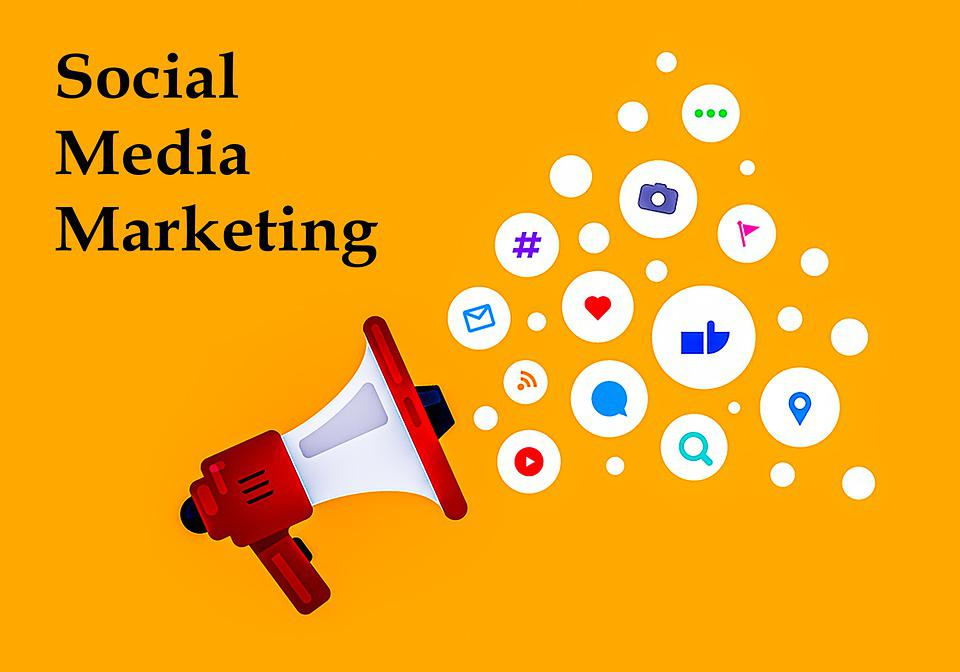
The channels that can be used for social media marketing include:
Snapchat
There are a few things that all marketers should keep in mind when creating a viral social media campaign. First and foremost, the content must be shareable. That means it should be funny, interesting, or provocative. It also needs to be relevant to the audience you’re targeting. Second, the campaign must be easy to understand and share. Make sure your visuals are eye-catching and use a catchy headline or slogan. Third, you need to make sure your timing is right. The campaign should launch when people are most likely to share it.
Pay Per Click (PPC)
PPC, or Pay-Per-Click, is one of the most popular online advertising models. It allows you to place ads on search engines and other websites and only pays when someone clicks on your ad. This makes it a very cost-effective way to reach your target audience. There are many different types of PPC ads, and you can target your ads to specific demographics and interests. You also have control over how much you spend each month, so you can ensure that your budget is manageable.
Other channels where you can use PPC include:
- Paid ads on Facebook: There are a few different ways to run ads on Facebook. The most common is the boosted post. With this option, you pay to have your post shown to more people. You target your audience by location, age, gender, interests, and more. Another way to run ads on Facebook is with the help of a Facebook Ads Manager. With this tool, you create an ad campaign with a budget, target audience, and schedule. You can also track your ad’s performance and see how many people saw it, clicked it, and converted it (made a purchase, filled out a form, etc).
- Twitter Ads campaigns: Twitter Ads are a powerful way to reach new customers and grow your business. With Twitter Ads, you can create campaigns that target people based on their interests, what they’ve tweeted about, and even where they are. Twitter Ads also make it easy to track how your campaigns are doing. You can see how many people saw your ad, how many clicked through, and how much money you’ve spent. You can also see which tweets are performing the best so you can replicate that success.
- Sponsored Messages on LinkedIn: LinkedIn Ads are a powerful way to reach out to potential customers on a professional networking site. LinkedIn Ads allows businesses to create sponsored messages that appear as regular updates in the LinkedIn news feeds of target users. LinkedIn Ads can be used to promote content, products, and services to LinkedIn users. LinkedIn Ads campaigns can be targeted by location, company size, job title, and other factors. LinkedIn also offers a variety of ad formats, including text, image, and video ads.
Affiliate Marketing
Affiliate marketing can be a great way to monetize your blog or website. It’s a type of marketing where you promote someone else’s product or service and receive a commission for each sale that you make. There are many different ways to go about affiliate marketing, and it can be a great way to make extra money or even create a full-time income.
When it comes to marketing, there are many different strategies that can be employed. One of the most popular and successful strategies used today is working with influencers. An influencer is a person who has a large following on social media and/or in their industry and is respected by their followers. When businesses work with influencers to create content or promote a product or service, the campaign tends to be more successful than if it were done alone. This is because the influencer’s followers trust their opinion and are more likely to take action based on what they recommend.
Native Advertising
Native advertising is a form of paid media where the ad looks and feels like editorial content. It’s been around for a while, but it’s become more popular in recent years because of the way people consume content. People are more likely to trust the content that looks like it’s from a reputable source, and as a business, you want to be seen as a reputable source. Native advertising can help you do that. It allows you to place your content in front of your target audience in a way that feels natural and less intrusive.
Marketing Automation
Marketing automation is the use of software to automate marketing tasks. This can include things like email marketing, social media marketing, and targeted ads. Automating these tasks can help you save time and improve your results.
There are a number of different marketing automation tools available. You should choose one that fits your needs and your budget. Once you have chosen a tool, you need to create a plan for how you will use it. You should also create a schedule for regular tasks. This will help you make the most of your marketing automation tool.
- Email newsletters automation: Almost every business sends out email newsletters, but very few of them are automated. Automating your email newsletter process can save you a lot of time and money. It also ensures that your newsletters are always sent on time and that they look good no matter what device or email client the recipient is using. There are a number of different ways to automate your email newsletter process. You can use a tool like Sendy to send out your newsletters from your own server, or you can use a service like Mailchimp to do it for you.
- Social media post scheduling: One of the most important aspects of a successful social media strategy is scheduling your posts ahead of time. This ensures that your content is seen by your followers at the times when they are most likely to be online and interested in what you have to say. There are a number of different tools that you can use to help you with this process. Some popular ones include Hootsuite, Buffer, and Sprout Social. These tools allow you to schedule posts for all of your social media profiles at once, which makes things a lot easier.

- Lead-nurturing workflows: Lead nurturing is the process of building relationships with potential customers who have identified themselves as being interested in your product or service. The goal of lead nurturing is to turn leads into customers, and customers into repeat buyers. It’s a process that requires time and effort, but it’s worth it in the long run. There are a number of different techniques that can be used for lead nurturing. The most important part is to create workflows that are tailored to the needs of your business and your customers.
- Campaign tracking and reporting: Tracking and reporting on digital marketing campaigns is essential for understanding their effectiveness and optimizing them for better performance. Without good tracking and reporting, it can be difficult to determine whether or not a campaign is meeting its objectives or not. There are a number of different ways to track and report on digital marketing campaigns. The most important thing is to use the right tools and track the right data. Depending on the type of campaign, different data will be more important.
Here are some of the most important types of data to track and report on digital marketing campaigns:
-Website traffic
-Conversion
-Call to action
Email Marketing
Email marketing is still one of the most effective ways to reach customers. It’s personal, direct, and has a high ROI. In fact, for every $1 spent on email marketing, the average return is $44.25. But not all email marketing is created equal. If you want to see results, you need to focus on creating content that’s valuable to your customers. That means no more spammy content or one-size-fits-all newsletters. Instead, focus on creating content that’s relevant to your customers’ interests.
There are many different types of email content that can be used to engage and connect with customers. Here are a few of the most popular:

1. Newsletters: A regular, recurring email that keeps customers updated on new products, offers, or company news.
2. Promotional Emails: A one-time email with a special offer or discount.
3. Customer Retention Emails: Emails sent to customers who have already made a purchase, in order to encourage them to make another.
4. Event Invitations: Emails inviting customers to attend an event, such as a web conference and many more
Online PR
Online PR is the process of managing the reputation of a company or individual on the internet. It involves creating and publishing content on the web that promotes the client and builds relationships with key people and organizations. Online PR is an important part of any company’s marketing strategy. It helps to create positive publicity, which can lead to increased traffic and sales. Online PR also builds trust and credibility for a company, which can be valuable in the long run. Channels that can be used for online PR include;
- Reporter outreach via social media: Many reporters are active on social media, and you can use this to your advantage when trying to get your story in the news. Twitter is a great place to start. You can search for reporters who have written about similar topics in the past, and then reach out to them directly. You can also find journalists who are covering the story you’re interested in and tweet at them, using the hashtag for the story. Facebook is another great platform for reporter outreach. You can search for reporters who live in your area, or who cover the beat you’re interested in.
- Engaging online reviews of your company: Online reviews can make or break your business. They can either attract more customers or scare them away. It is, therefore, important to ensure that all your online reviews are positive and engaging. One way to achieve this is to actively engage with your customers who leave online reviews. Thank them for their feedback and offer to help resolve any issues they may have had. If you are able to turn a negative review into a positive experience for the customer, they are likely to revise their opinion of you – and might even leave a positive review.

- Engaging comments on your personal website or blog: One way to keep people coming back to your website or blog is to make sure you are engaging with your readers in the comments section. This can be a great way to get to know your readers, and also show that you are actively engaged in your content. Make sure you are monitoring the comments section, and respond to any questions or comments that are left. You can also take it a step further and start a conversation with your readers by asking them their thoughts on a certain topic. This will help keep them engaged, and also help you learn more about what they are interested in.
Inbound Marketing
Inbound marketing is a term for a marketing strategy that focuses on attracting customers through content and interactions that are relevant and helpful. Inbound marketing is all about creating quality content that will help to attract and convert customers. It’s a great way to attract attention online and can be used in conjunction with other digital marketing strategies, such as SEO, social media marketing, and email marketing. Inbound marketing is all about creating a great user experience and providing valuable content that helps customers solve their problems.

Sponsored Content
Sponsored content is a form of marketing that businesses use to get their name in front of potential customers. It’s when a company pays a publication, such as a blog or a website, to write about them or include them in a list. Sponsored content can be a great way to get your business in front of a new audience. However, it’s important to make sure that the content is high quality and relevant to the publication’s audience. Otherwise, you could end up alienating your potential customers.
Search Engine Marketing (SEM)
SEO and SEM are two of the most important aspects of online marketing. SEO, or search engine optimization, is the process of improving the visibility of a website or web page in search engine results pages (SERPs).
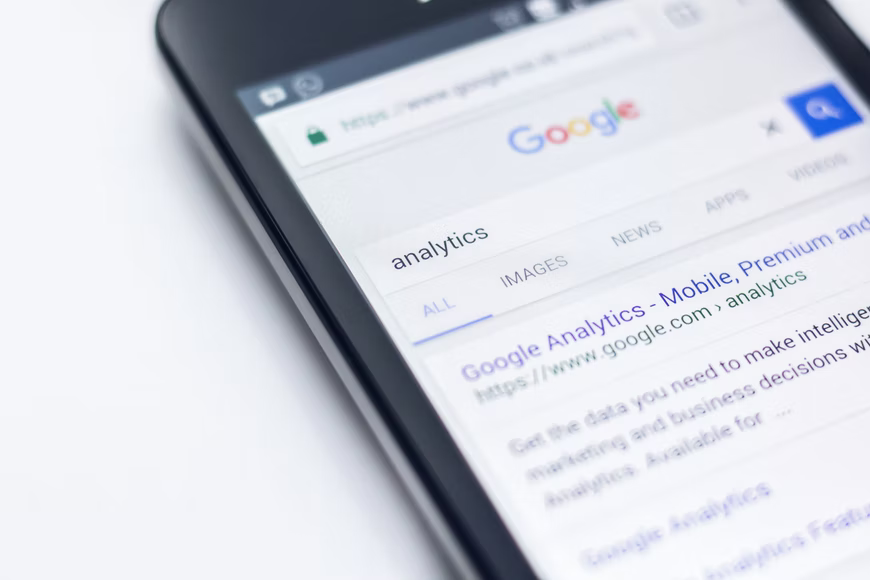
SEM, or search engine marketing, is a form of internet marketing that involves the promotion of websites by increasing their visibility on search engine results pages through the use of paid advertising. Both SEO and SEM are essential for businesses that want to increase traffic to their websites. SEO helps businesses to rank higher in SERPs for free, while SEM allows businesses to purchase ads that will appear above and beside the search results.
Instant Messaging Marketing
Instant messaging (IM) is a form of online communication that allows people to have real-time conversations with one another by sending text messages back and forth. IM is a powerful marketing tool because it allows you to connect with your customers on a personal level.

You can use IM to answer customer questions, provide customer support, and promote your products and services. IM also helps you build customer relationships by allowing you to get to know your customers better. When you develop a personal relationship with your customers, they are more likely to buy from you.
You can consult our Digital Marketing experts at Raven and Macaw to help you build and promote your business online.