INSIGHTS &EXPERTISE

Stay ahead of the curve with our latest thoughts on digital marketing, design, and brand strategy

2 posts found

Benefits of SEO to Your Business
Articles
Jun 14, 2022
8 min read

Benefits of SEO to Your Business

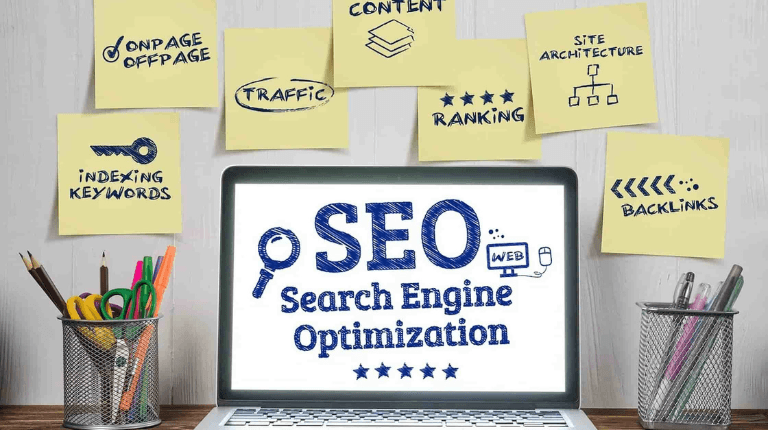
What Is SEO? Wondering what SEO is? The acronym stands for Search Engine Optimisation. Easily understood as the process of improving your site to increase visibility on search engines like Google, Bing, Yahoo, and others when people search for services or products that are related to your business.  It also simply means you are garnishing your online business pages to create a presence in the internet world, popping up on a user’s screen whenever they search for anything related to your business. As a result, your business gets a better and higher ranking while your website’s relevance and usability increase, creating more traffic. How SEO Works Search engines use many factors to generate results. For example, Google uses more than 200 hundred factors. SEO optimises your site for these factors while getting your site crawled and indexed.  Search engine companies use those factors to determine whether the content is relevant. So if your website content is appropriate, you go on the list; if it isn’t, then sorry, maybe next time. Try harder. More so, search engines will have to crawl and index your content. Linking and backlinking is essential to SEO. Crawlers, also known as spiders, use links to discover and re-discover existing pages and content on the web. Search engines index to store web content and deliver it through search results. Once crawling has been done, your content can be indexed but be careful not to fall under the category of blocked, spam, or duplicate pages, or your chances of getting indexed will be rare or none. Once you’ve passed this level, a search engine will analyse your pages against its factors which are about 200 and even more; for example: Content creation Keyword usage Mobile-friendliness Backlinking profile A good search engine optimisation requires identifying relevant keywords with good search traffic potential, creating high-quality, helpful content, optimising it for search engines and users, including relevant links from high-quality sites, and measuring the results.  Do these, and your site will draw dense traffic, which means more popularity. Who doesn’t want that kind of internet presence?  Now that you know what Search Engine Optimisation and SEO are, let’s talk about SEO on Google. How Does Google Work? Search engines like Google follow links from one webpage to another. It has a crawler, index, and algorithm. This search engine crawls through contents on the web, indexes them and makes them visible on search results. This it does, 24 hours, 7 days a week, saving HTML versions of pages on a vast database which is the index and updates anytime new content appears as it crawls back to that web page.  The new version of your page is saved, depending on the traffic your page generates. For Google to find your site, there has to be a link from another site already on the index. Once a crawler follows that link to your site, it gets saved on the index. Once your website is saved, it gets to appear on Google search results.  However, Google has a specific algorithm that decides which sites appear on search results and in which manner, that is after getting indexed. The way these algorithm works is only known to Google. The algorithms are not static; they are updated often, and we don’t know which factors are more important to follow than others.  Although, we can experiment with many factors like the use of keywords, relevant content, etc. Doing this will give us an experience of what is important or more important to always appear on top of the search result’s list. Bear in mind that there are organic search results and paid search results. Paid search results will appear on top of the SERP, with organic coming immediately. However, paid or organic target different categories of users depending on the search. So organic search results may reach a broader range of people than paid, depending on the kind of searches.   Links Have Value The more links a site has, the more important search engines see. Those links are pointers to your page. Internal links (coming from your site) and external links (from other sites) help rank a web page on Google, but some links are more important than others.  Webpages with many incoming links are more important than small sites with fewer links. So gather or build up enough valuable links and be careful about collecting links from shady sites, or Google will punish you.  Links have value. The kind you collect and connect with your site determines your relevance to search engines and whether your content is worth being on the search results.  With that all laid on the table, you can adopt some techniques that could promote your business while benefitting from Search Engine Optimisation.  The Benefit of SEO to Your Business SEO is a highly beneficial tool for your business. Whether it’s a start-up or already an established company, what keeps your business going is consistent marketing, advertising, and content creation that tells your customers what your brand is all about.  When your customers have a positive experience with your business, you get more web clicks, increasing traffic and your SEO, thereby increasing your rank on the Search Engine Result Page (SERP).  User experience includes how well your customers can navigate your site, find products they search for and get the required results. In addition, they will give you their trust because they know you will always come through for them.  SEO is a platform for visibility. Therefore, knowing what people are looking for by conducting thorough SEO research is vital. This is where knowing your audience and their needs are significant. That is also known as Local SEO. Local SEO uses the geographical location of your business in search results. Therefore, your location can contribute to your online visibility. When a potential customer searches for a question followed by “near me” or within your geographical proximity, you want your business to come up first. Increasing Local SEO will increase your online visibility, leading
Raven & Macaw Team
READ
The Overview of Digital Marketing
Articles
Jun 7, 2022
24 min read

The Overview of Digital Marketing

With the popularity and accessibility of internet services, there are so many people online every day. The number keeps going up daily as more and more people are becoming tech-savvy.  It is a fact that the continuous internet usage has also increased by 7 per cent among adults, within the past three years based on the Pew research reports. Consumers’ behavior has changed rapidly which means that a lot of offline marketing activities are no more effective than they have been in the past.   The general idea of marketing is connecting with the right audience and pitching your business at the appropriate time. Presently, marketing means getting to know why your target audience is how much time they spend on the internet and how best to reach out to them.  Digital marketing in its simple terms means marketing online to the general audience. Here at Raven and Macaw, we believe that inbound marketing is an effective way to engage online users and market your product and services to the users. It is also a way to delight the customers of your business in cyberspace. With that being said, a lot of people have questions about the details surrounding digital marketing and what it entails. In this piece, we have decided to answer all questions relating to digital marketing and how it’s being carried out in the present age.  What is Digital Marketing? Digital marketing is the process of designing, executing, and measuring marketing campaigns that use digital technologies to reach and engage consumers. It has become an essential part of the marketing mix for businesses of all sizes, as it enables them to connect with their customers where they are spending the majority of their time: online. Digital marketing encompasses a variety of channels, including email, social media, search engines, and websites. Digital marketing encompasses a variety of activities, including search engine optimization (SEO), social media marketing, email marketing, paid advertising, and more. The goal of digital marketing is to create an interactive relationship with customers and prospects through electronic channels. How Does a Business Define Digital Marketing? At this point, it is crucial for every business to build their brand awareness on the internet. Every brand has invested in building a website that shows what its activities as a business are.  There are many different ways to execute a digital marketing strategy. Some businesses focus on website optimization, others on email marketing, and still others on social media campaigns. The most important thing is to identify which channels your customers are using and to tailor your marketing efforts to those channels. Digital content and marketing is an essential way for engaging consumers. Customers now expect and rely on your website and digital marketing efforts to learn about brands. Since digital marketing has so many options and strategies associated with it, you can get creative and experiment with a variety of marketing tactics on a budget. Why is Digital Marketing Important? Digital marketing is important because it allows businesses to reach a larger audience more efficiently than traditional marketing methods. With digital marketing, businesses can target specific customers based on their interests and needs, which leads to a higher ROI for the company. Additionally, digital marketing is a cost-effective way to reach a large number of people. Major Benefits Of Digital Marketing Digital marketing is one of the most efficient and effective ways to reach out to customers and promote your business. It has a number of advantages over traditional marketing methods: 1. Reach: Digital marketing enables businesses to reach a large number of people in a short amount of time. 2. Cost: Digital marketing is much more cost-effective than traditional marketing methods. 3. Efficiency: Digital marketing is more efficient than traditional marketing methods, as it allows businesses to target specific customers with customized messages. 4. Flexibility: Digital marketing is highly flexible, allowing businesses to adjust their campaigns according to their audience needs. 5. Increased reach: With digital marketing, you can reach a wider audience than ever before. 6. Greater engagement: Digital marketing allows you to engage with your audience in a more interactive way. Reach: Digital marketing enables businesses to reach a large number of people in a short amount of time. With digital marketing, businesses are able to communicate with a large number of people in a short period of time. This is done by targeting a specific audience and using various digital channels to deliver the marketing message. For example, businesses can use social media platforms, such as Facebook and Twitter, to reach a large number of people. Additionally, businesses can use search engine optimization (SEO) to improve their website’s ranking on search engine results pages, which will result in more people visiting their website. Cost: Digital marketing is much more cost-effective than traditional marketing methods Digital marketing is much more cost-effective than traditional marketing methods. With traditional marketing, you have to print materials, purchase airtime or billboard space, and hire people to distribute your materials. With digital marketing, you can reach a much larger audience for a fraction of the cost. You can also track your results more accurately with digital marketing. You can see how many people clicked on your ad, what they did when they got to your website, and how many sales resulted from your campaign. This information allows you to make changes and improve your campaigns for future iterations. Efficiency: Digital marketing is more efficient than traditional marketing methods, as it allows businesses to target specific customers with customized messages. Digital marketing is more efficient than traditional marketing methods for a variety of reasons. One reason is that it allows businesses to specifically target their audience. With digital marketing, businesses can target people based on their interests, demographics, and even their past behaviours. This level of specificity is not possible with traditional marketing methods. Another reason that digital marketing is more efficient is that it is less expensive than traditional marketing methods. Digital marketing strategies are often less expensive to execute

Raven & Macaw Team
READ